The Coconut Seed: A Biological Masterpiece
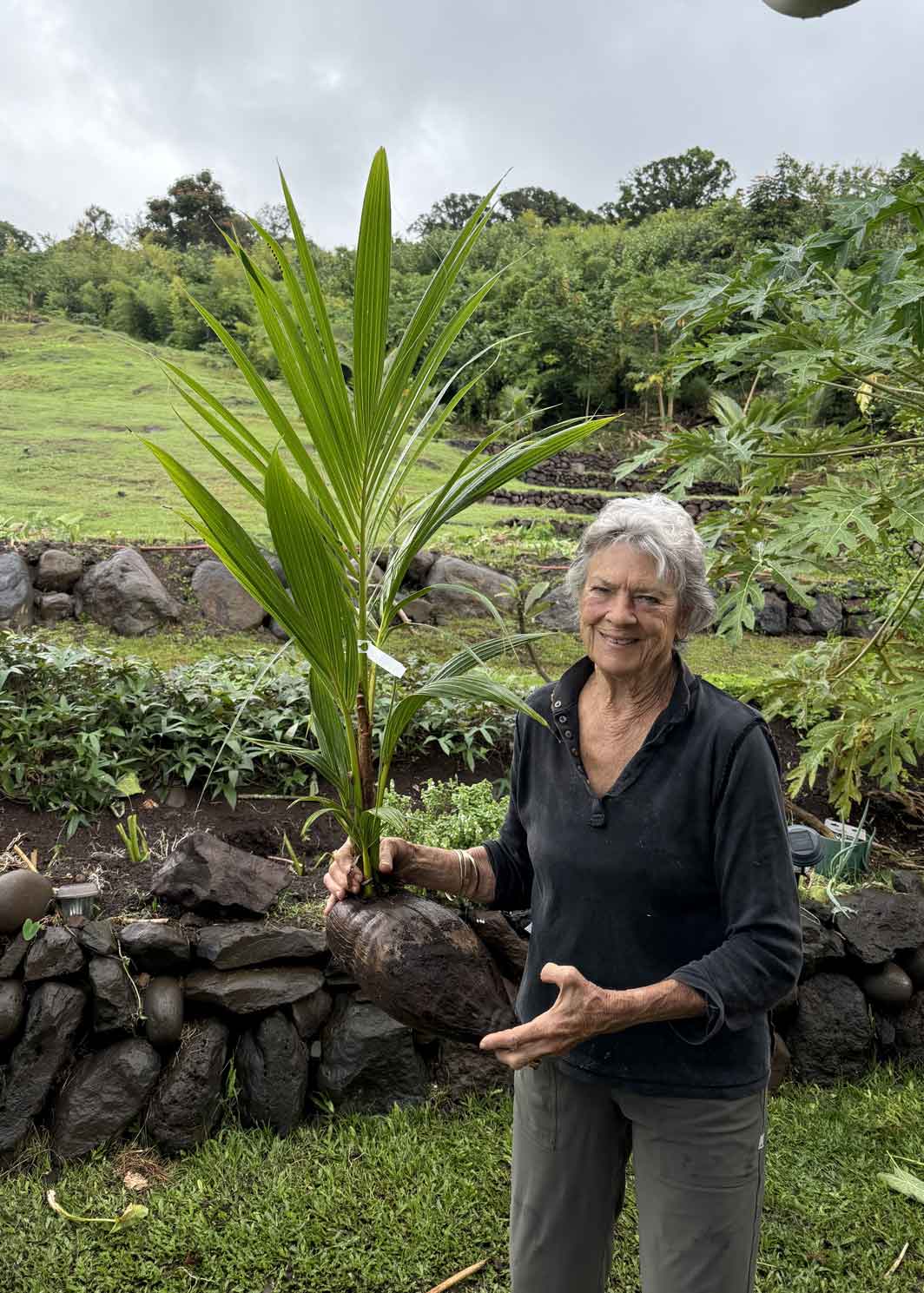
To truly appreciate why the the Niu (coconut) plant is worth saving, we have to look at the extraordinary life inside the shell that’s evolving long before a palm tree ever touches the sky. Let’s explore the journey from a floating seed to a flowering giant.The Voyager’s Suitcase
A coconut isn’t just a fruit; it is a biological masterpiece of engineering. Imagine a seed designed to survive months at sea, battered by salt and sun, only to thrive the moment it hits the sand. That thick, fibrous husk is a life jacket; the hard inner shell is a vault. Inside, the coconut water acts as a “canteen” of hydration, and the white meat is the “pantry” of energy. For the endangered Niu, this seed is a tiny, floating promise of a future forest.The Haustorium
When a coconut decides it is time to become a tree, a transformation begins inside the shell that few ever see. A spongy, white, marshmallow-like sphere begins to grow, filling the center. Scientists call this the Haustorium, but many know it as the Coconut Apple. It is a botanical alchemist; it literally “eats” the water and meat from the inside out, turning them into the fuel needed to push that first green sprout toward the sun.
The Inflorescence
Before the seed, there must be a flower. The Inflorescence is the branching, golden “cradle” that emerges from the top of the palm. It holds the tiny blossoms that, if protected and pollinated, will eventually swell into the next generation of coconuts. Because the Niu is endangered, each inflorescence is a precious event. Protecting the tree means protecting this cradle so the cycle of the “Apple” and the “Voyager” can begin all over again.