Why Niu (the coconut palm) is the Ultimate Tree of Life
Niu (the coconut palm) is perhaps the most recognizable tree in the world, but to the people of the Pacific, it is far more than a tropical backdrop. It is a symbol of resilience, a culture and a literal lifeline.
The Purest Water on Earth
Niu provides for our most basic need: water. In fact, the water found inside a young coconut is not only alkaline, but also considered the most sterile water on Earth. Alkaline coconut water offers significant health benefits, primarily through superior hydration and high electrolyte content, such as potassium, magnesium, and calcium, which support nerve, muscle, and heart function. Its high pH helps neutralize dietary acid. It’s a nutritious alternative to sugary drinks and aids in post-exercise recovery. Throughout history, stories tell of island and coastal peoples surviving months of drought with nothing but niu to drink.
Built for the Elements Botanically known as Cocos nucifera, the niu is a masterpiece of engineering. Some varieties growing up to 100 feet tall, its slender trunk is incredibly elastic. During hurricanes, this flexibility is a lifesaver—literally. There are accounts of people lashing themselves to the trunk of the niu to avoid being swept out to sea, trusting the tree to bend without breaking.
The Voyager’s Cargo Niu was a “canoe plant”—valued cargo brought to the Hawaiian islands by the original Polynesian voyagers. But the tree is a voyager in its own right; a coconut can float at sea for up to four months and still germinate once it hits sandy soil.
A Spiritual Connection
The Kinolau of Ku In Hawaiian culture, niu is the kinolau (physical manifestation) of the deity Ku. While Ku is often associated with war and transition, he also represents male energy, uprightness, and growth. Because the niu stands tall and reaches toward the heavens, it is a perfect earthly form for this powerful akua. Learn more about Ku by visiting here.
A Lifetime of Support
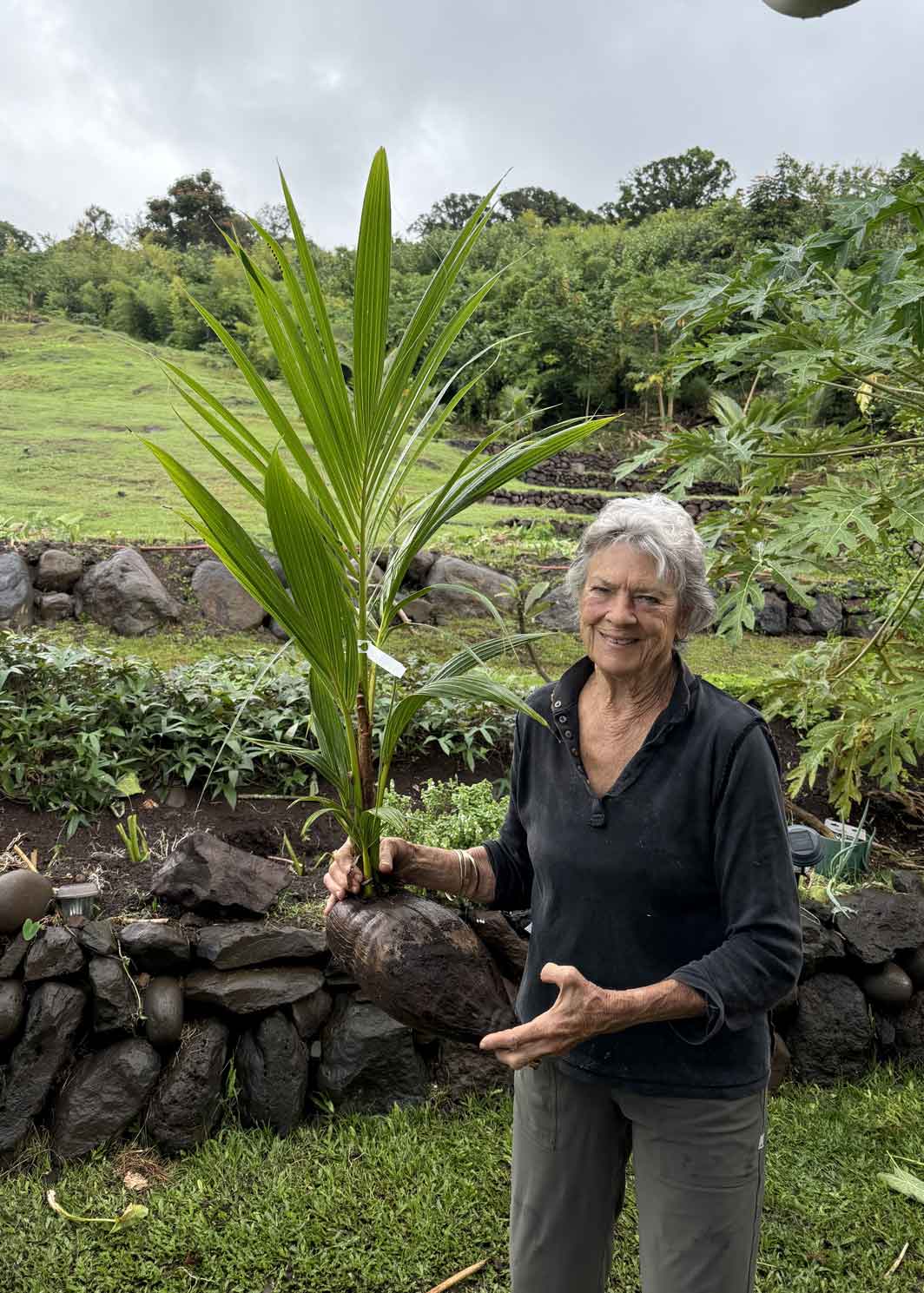
Traditionally, a coconut palm is planted at the birth of a kama`aina (child of the land). By the child’s seventh birthday, the tree begins to bear fruit, and it will continue to provide food for 70 to 100 years—a full human lifetime. From housing and clothing to musical instruments and fuel, it is said that more uses are made of the niu than any other tree in the world.
Wahi ka niu—break open the coconut and discover the life within!
To learn more about the gene bank, please visit the Gene Bank webpage here.