
The History & Heritage of Koali Niu
The Koali Niu project is situated on a 5.39-acre parcel that was once part of the original 900-acre Koali Ranch in Hāna, Maui. The land’s modern history is layered, complex, and inextricably linked to the broader story of Hawai‘i itself.

Bob Liljestrand’s father, Howard Liljestrand
Late 1940’s
Koali Niu: The Land Before the Project
In the late 1940s, Koali Ranch was purchased by Richard V. Vanderburgh of Honolulu. Seeking guidance and leadership, Vanderburgh enlisted the help of forward-thinking individuals, including my father-in-law, Dr. Howard Liljestrand, who was appointed President of a landholding group formed for the project, Hanahuli Ltd.
At the time, Honolulu was rapidly transforming from a quiet port city into a growing metropolis shaped by wartime expansion. Many families longed for what they felt was “Old Hawai‘i”—a slower pace of life, deep connection to land, and room for children to grow immersed in nature. For them, Hāna represented a village seemingly untouched by time.
The Liljestrands, like others involved, envisioned a second home and a place where their four children could swim, ride horses, and explore the land. Hanahuli Ltd. planned to subdivide and sell parcels to like-minded Honolulu families. Those plans were disrupted when Vanderburgh passed away several years later, creating legal and logistical complications.

Bob Liljestrand

Vicky Durand
1980’s and 1990’s
A Difficult Truth
The Koali Ranch property had previously been acquired from a man named Frederick Drummond. Only later did it become known that the land had been wrongfully taken from local Hawaiian families. Stories persist of coercion and exploitation—accounts of land exchanged for alcohol, intimidation, and pressure.
As this history became understood, resentment toward Hanahuli Ltd. understandably grew. To local families, the land now represented loss—held by well-to-do haole outsiders rather than its original stewards. When I first came to Hāna with Bob, there were signs hung from roadside trees expressing anger and grief. Those memories remain etched in my heart.
This history cannot be undone—but it must be acknowledged.
Stewardship Through Relationship
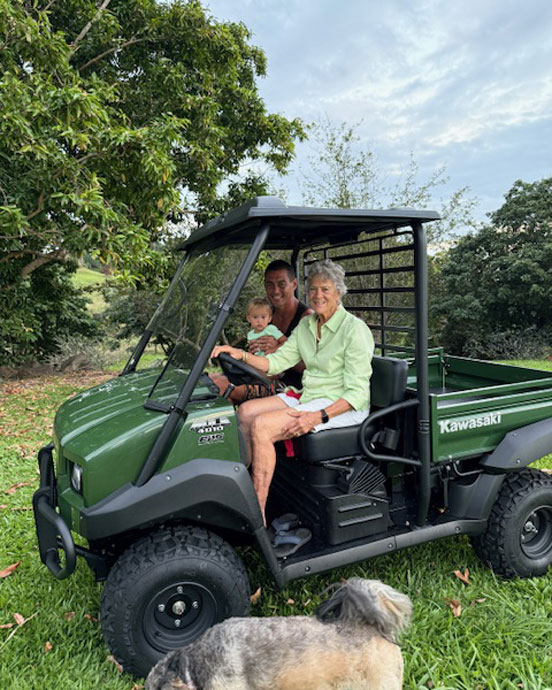
My late husband, Bob Liljestrand, acquired this specific parcel in the late 1990s, at the same time we reunited after meeting again at our 40th high school reunion. The land was overgrown, dense with invasive guava and jungle growth. Together, we began clearing the lower portion of the property by hand—removing invasives and restoring space for new life.
We planted bananas, exotic fruit trees, and ornamentals, including Pride of Burma, often described as one of the world’s most beautiful flowering trees, and a Pak Lan that now stands over sixty-five feet tall, covered each year in small, fragrant white blossoms.
Bob dreamed of designing a home here—a place of peace and creativity. After his father passed, much of our time shifted toward transforming the family home into the Liljestrand Foundation and working on a book. The Koali property remained a place of memory, labor, and intention.

Then, in 2021
A Turning Point
After Bob passed away in 2021—and following my departure from the Liljestrand Foundation—I reached a crossroads. I knew my life had to change, and that the land at Koali needed a new purpose rooted in humility and responsibility.
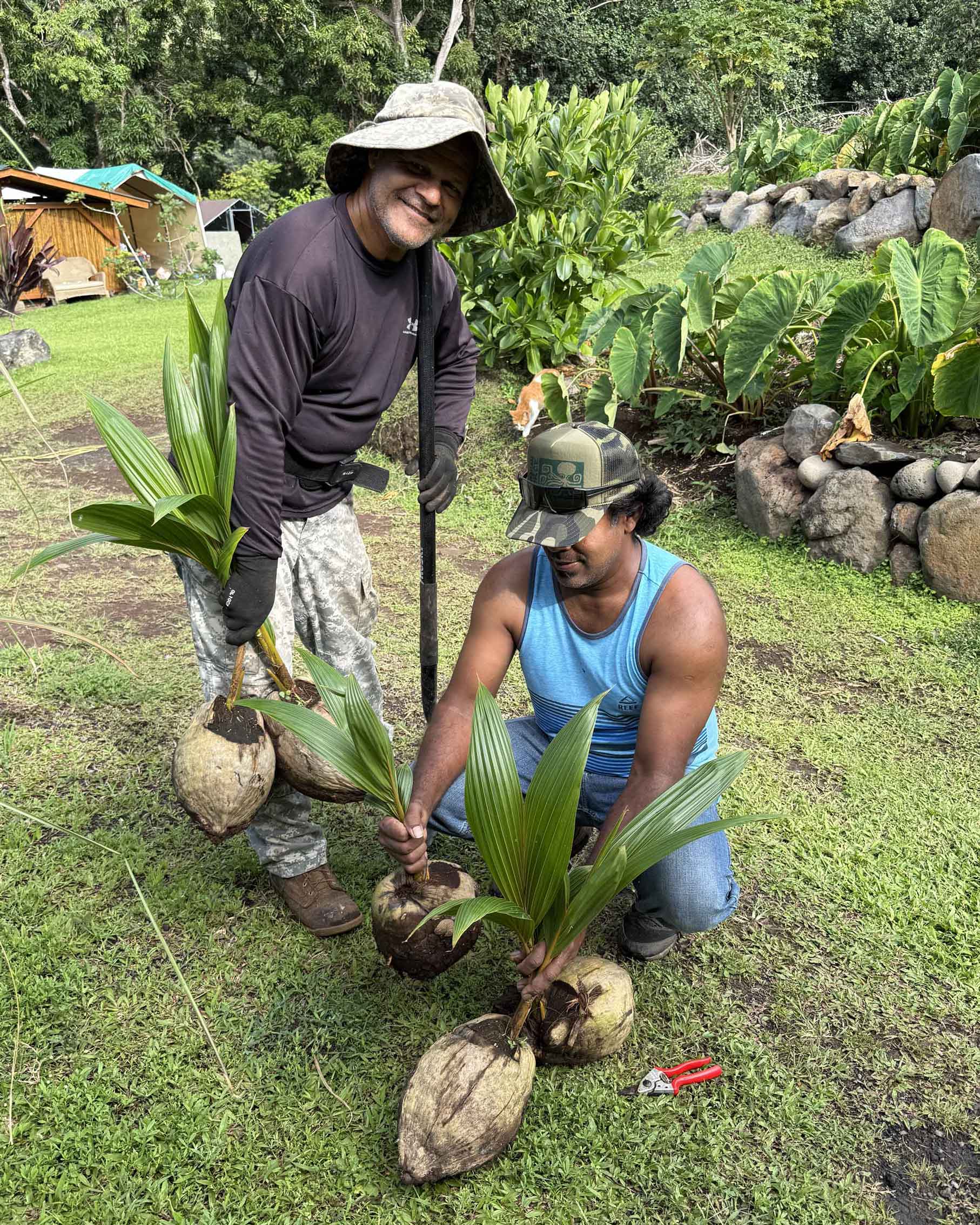
Around that time, I reconnected with an old friend, Indrajit Gunsakara, who had been working alongside Dr. Manu Meyer on a grassroots coconut revitalization effort known as Niu Now.
Through Indrajit, I began to understand the profound cultural, ecological, and genetic importance of the Niu—the coconut palm—and the urgency of its preservation. I realized that returning to Hāna was not about reclaiming land, but about giving back: to Hawaiian people, to ancestral knowledge systems, and to the living future of the land itself.
The Present
The Birth of Koali Niu
From that realization, Koali Niu was born.
Koali Niu is the first living coconut gene bank on Maui, created to identify, catalog, and perpetuate rare and ancient Hawaiian coconut varieties that are now at a critical tipping point. Without immediate action, many of these lineages would be lost forever.
This project is not about ownership. It’s about stewardship.
Koali Niu exists to honor the land’s past, acknowledge its pain, and contribute something meaningful to Hawai‘i’s future—protecting both the genetic diversity of the Niu and the cultural knowledge intertwined with it.
The Promise
A Note on Responsibility
We recognize that this land carries history—some of it difficult, some of it unresolved. Koali Niu moves forward with respect, transparency, and deep listening. Our intention is not to rewrite the past, but to ensure that what grows here now serves life, learning, and continuity for generations to come.
The Tree of Life
This land is stewarded with care, effort, and the tools required to do the work well. But the reason we do this work reaches far beyond the field—into culture, survival, and the future of island life. Click on the button below to learn about the many impacts the Tree of Life has on our culture and our sustainability.