
Our Leadership Team
The Koali Niu Gene Bank is guided by a leadership team whose combined experience—rooted in ancestral practice, scientific rigor, community stewardship, and lived relationship with Hāna—ensures this work is carried forward with depth, integrity, and lasting impact.
Please read what makes each of our leaders such a significant member of the Koali Niu gene bank, below.
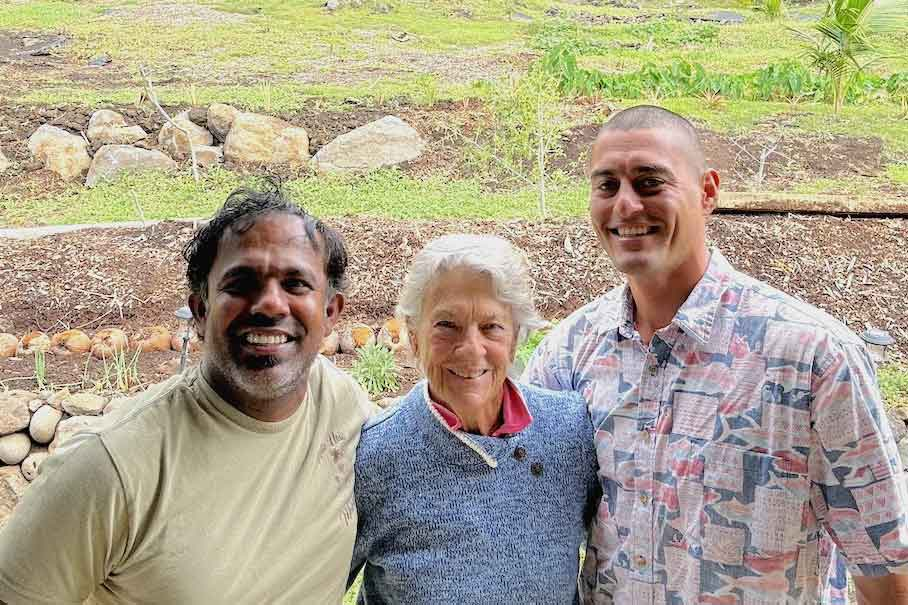
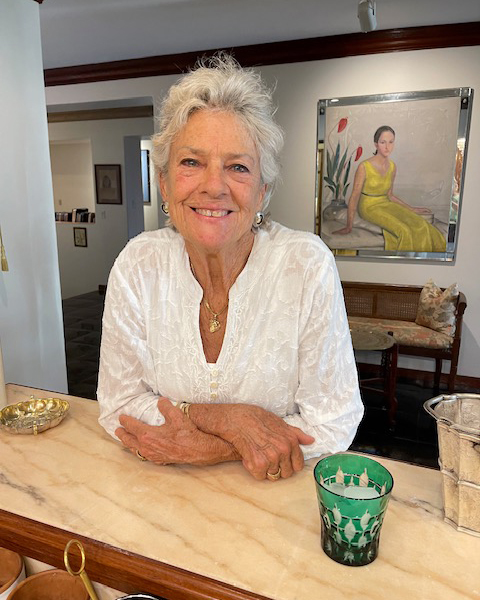
Vicky Durand
Founder & Board Secretary / Treasurer
Vicky Durand’s life and work are rooted in Hawai‘i—shaped by ocean, land, education, and a deep sense of responsibility to place. A graduate of Punahou School, Vicky spent her formative years as a young surfer in Hawai‘i. In 1957, she won the Makaha International Surfing Championships, one of the earliest organized surfing contests, at a time when the sport was still intimate, communal, and largely undocumented.
Alongside her mother—an accomplished surfer in her own right—Vicky was invited to Club Waikiki in Lima, Peru, where they served as mother-daughter Hawaiian surfing ambassadors, sharing the cultural roots of surfing beyond the islands.
Vicky Durand’s life and work are rooted in Hawai‘i—shaped by ocean, land, education, and a deep sense of responsibility to place.

James Freudenberg-Pu
Board President
Born and raised in Hāna, James Freudenberg-Pu carries a lifelong relationship with the land and ocean that sustain his community. A graduate of Hāna High School, he has spent more than fifteen years working with Ma Ka Hana Ka ʻIke, where he gained hands-on experience in traditional skills, land stewardship, and community-based education rooted in ʻike kūpuna—ancestral knowledge passed through practice and relationship.
As a father, husband, and waterman, James lives his responsibility to protect the natural resources that nourish daily life in Hāna. His connection to the ocean (kai) and land (ʻāina) is not symbolic—it is lived, practiced, and renewed through work, family, and service. These relationships guide his leadership and decision-making, always with future generations in mind.

Indrajit Gunsakara
Vice President
Indrajit Gunsakara brings a life shaped by land-based wisdom, cultural continuity, and deep reverence for the coconut as a living ancestor. He is currently the Director of Community Coconut Projects for the Kaulunani Urban Forestry Program, led by Dr. Heather McMillen, where he supports and expands ʻulu niu—coconut groves—across all Hawaiian islands through collaborative, community-centered stewardship. He has been involved in the planning and visioning of the Koali Niu Gene Bank since its earliest days.
Indrajit descends from a long lineage of Indigenous farmers in southern Sri Lanka, where land-based spiritual farming has been practiced continuously for more than two millennia. His ancestral home of Matara is centered within one of the world’s ancient coconut landscapes—stretching over thirty miles and originally planted in 589 A.D. Subsistence farming knowledge and associated coconut practices continue to be actively perpetuated there today.

Photo Credit: Linny Morris
Dr. Rolan Bourdeix
Scientific Advisor
Dr. Roland Bourdeix is passionate about diversity—and protecting it before it disappears. He was the first PhD student at the French Agricultural Research Centre for International Development (CIRAD) and is now recognized as one of the world’s leading experts on coconut genetics. Over the course of his career, Dr. Bourdeix has led projects and expert missions related to coconut agriculture in more than forty tropical countries, helping shape how coconut diversity is understood, protected, and sustained worldwide.
From 2000 to 2014, he worked on behalf of CIRAD’s Coconut Research Programme and the CEFE Research Unit “Bio-cultural interactions” in Montpellier, France. From 2011 to 2013, he coordinated the International Coconut Genetic Resources Network (COGENT), now gathering 41 coconut-producing countries. In 2014, he joined CIRAD’s Research Unit AGAP (Genetic Improvement of Mediterranean and Tropical Plants) and its scientific team DDSE (Dynamics of Diversity, Societies and Environments).
His research has gradually evolved from genetics into a multidisciplinary approach that integrates ethnology and multifunctional landscape management—grounded in a guiding belief: to understand the diversity of crops, we must look not only at plants, but also at the humans who cultivate them and the cultural knowledge they carry.
Our Partners


Learn more about how much our partnerships mean to us and how you can help.
Ready to Make a Difference?
There are many opportunities to assist us at the Koali Niu Gene Bank. From helping maintain the land to education outreach to sponsoring a tree or making a donation, we appreciate your help.